Glass waste,
rebuilt as public infrastructure.
GLASTE repurposes glass waste into durable surfaces for cities, councils, developers, and age-friendly facilities, proving that material once headed for landfill can return as civic value.
GLASTE is not asking cities to care about sustainability in the abstract. It gives them a practical material system: divert glass waste, reduce repeat surface maintenance, and turn visible public works into evidence of circular economy action.
Repurposed, not recycled
Post-consumer glass becomes calibrated aggregate for infrastructure surfaces instead of a landfill liability.
Already commissioned
Municipal deployments across Malaysia show the model working in real public environments, not mockups.
Designed for adoption
The platform serves councils, developers, public spaces, and care infrastructure with site-specific surface systems.
This isn't a concept. It's already on the ground.
The brand is anchored by real municipal sites, visible public surfaces, and documented transformations. The photography is not decoration; it is the evidence system.

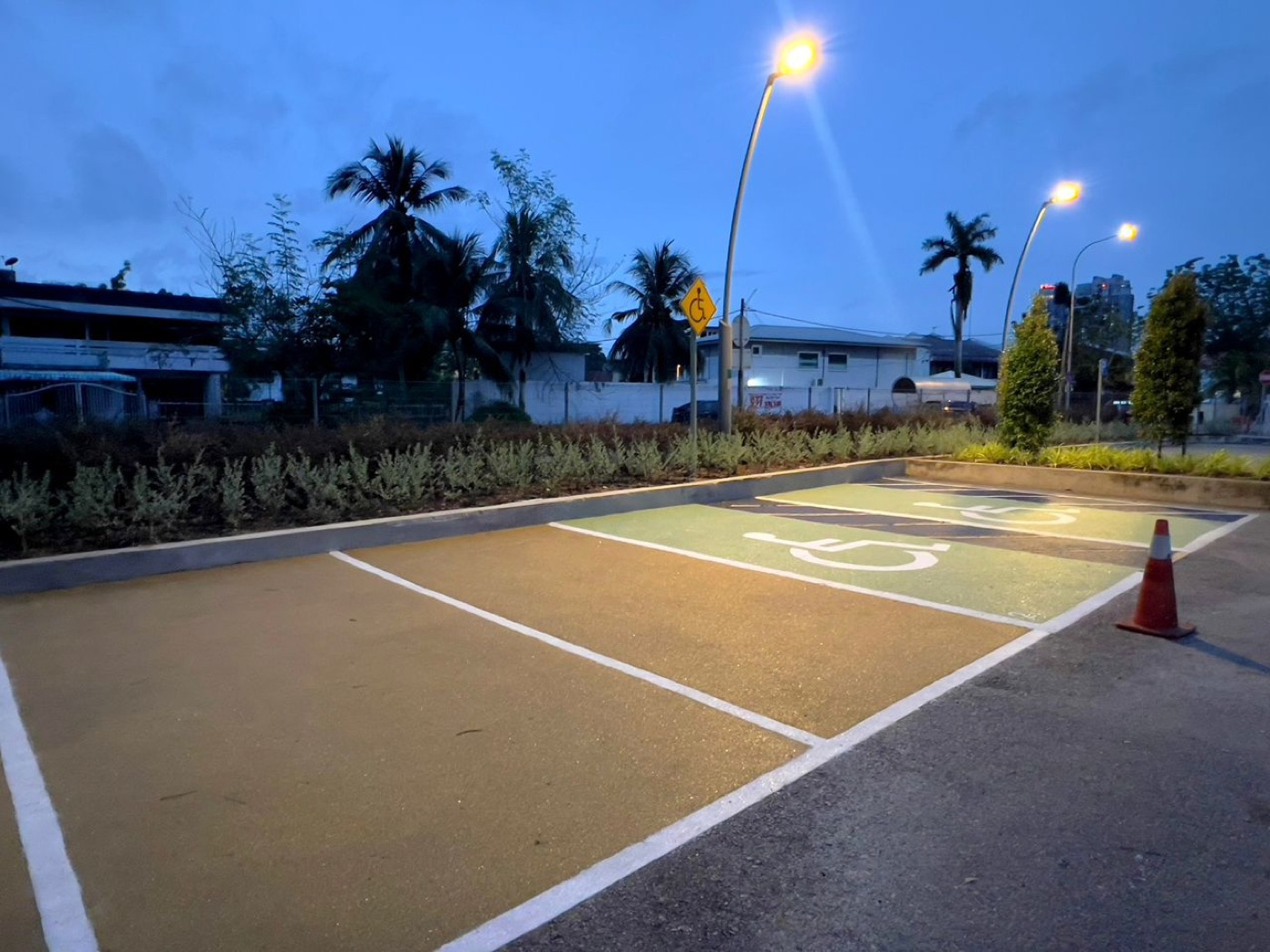
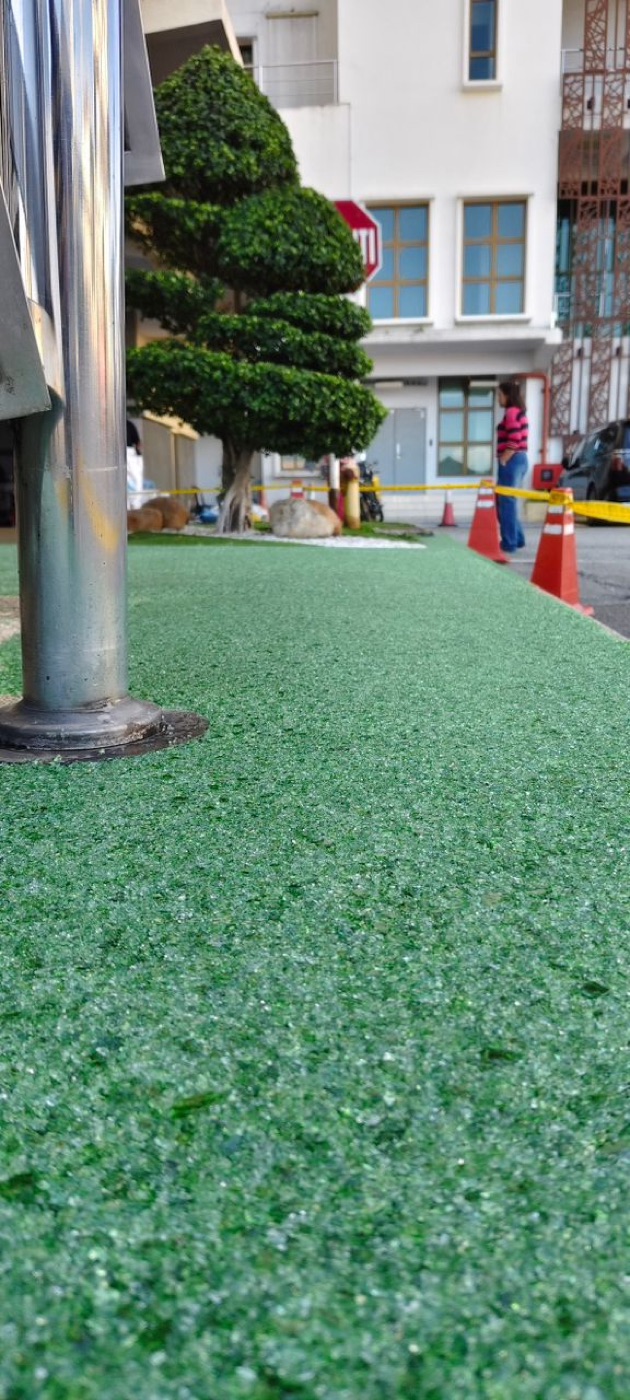
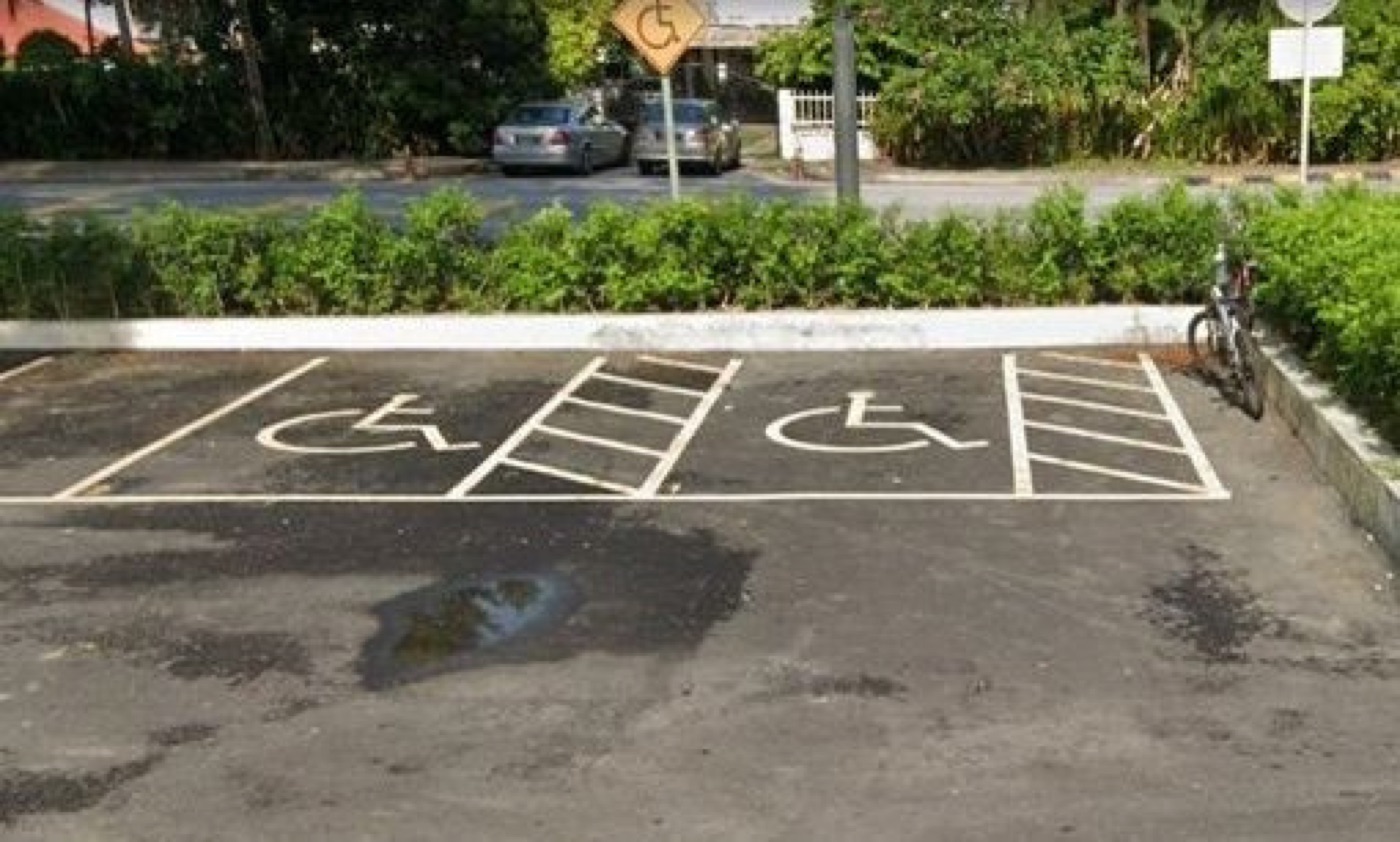
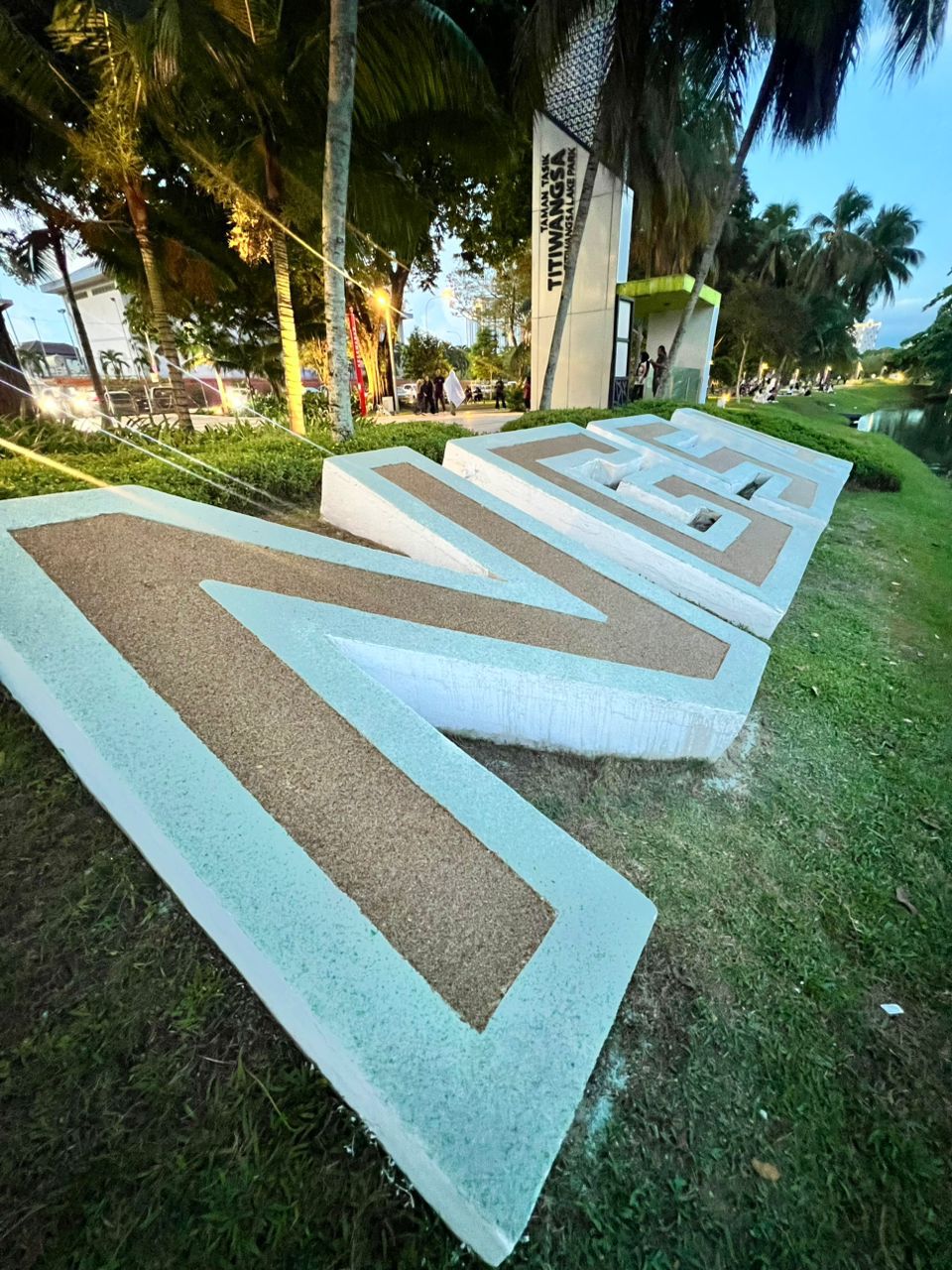
A Kuala Lumpur landmark, rebuilt from material the city had already discarded.
DBKL adopted GLASTE for high-visibility public surfaces, including landmark municipal spaces such as Taman Tasik Titiwangsa, turning post-consumer glass into a visible public infrastructure asset.
Urban surfaces wear out quickly.
Conventional markings and coatings face heat, UV exposure, traffic, and recurring maintenance cycles.
Glass waste was repurposed as surface aggregate.
GLASTE processed discarded glass into calibrated aggregate and bound it into a durable resurfacing system, giving it a new purpose beyond landfill.
Procurement proof in Malaysia's capital.
The deployment demonstrates municipal adoption, documented transformation, and a practical pathway for circular public works.
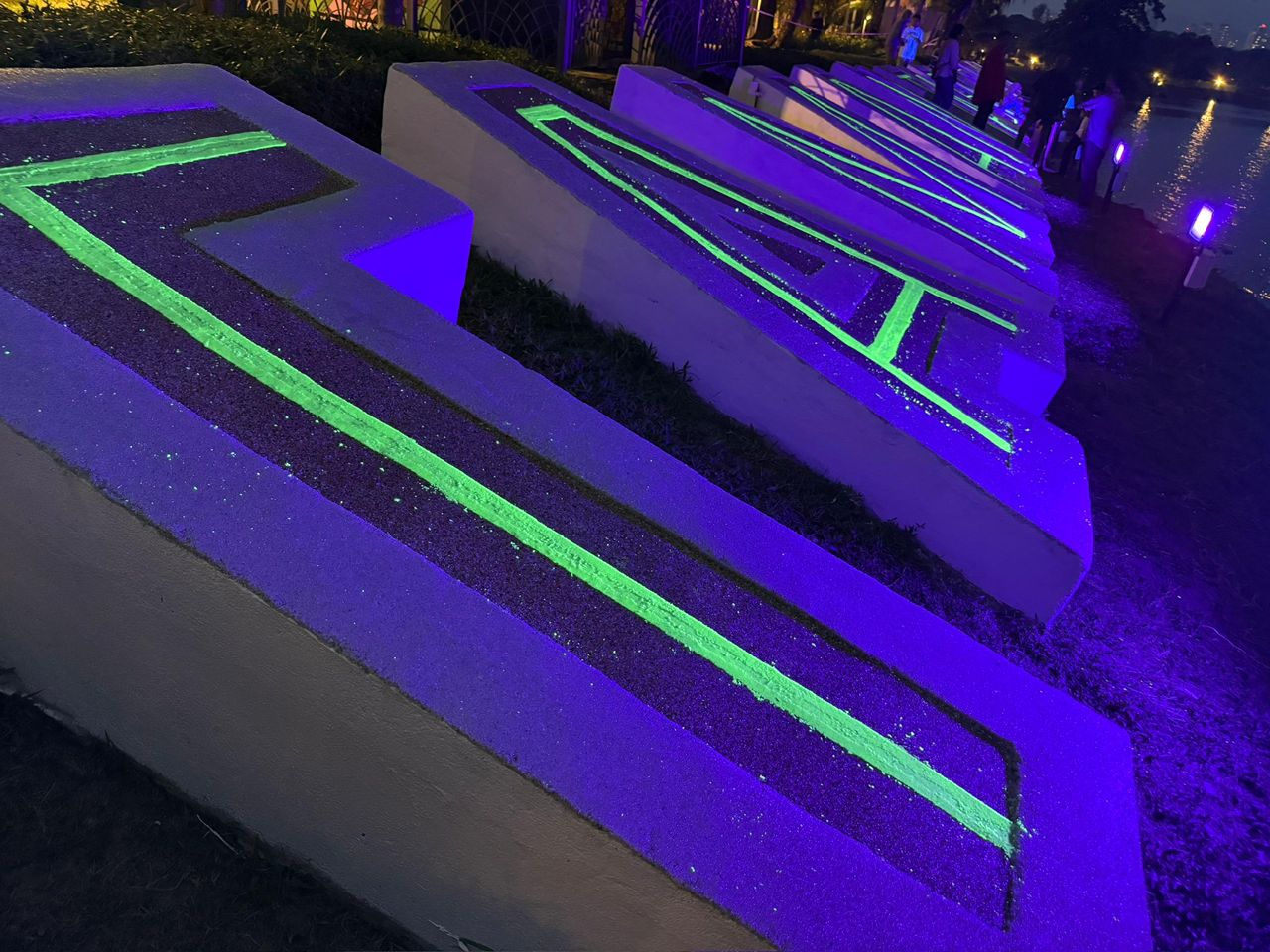
Before, after daylight, and after dark: the same landmark surface, repurposed.
These views show the full public-space value: neglected landmark lettering becomes a durable daytime surface and a visible night-time installation.
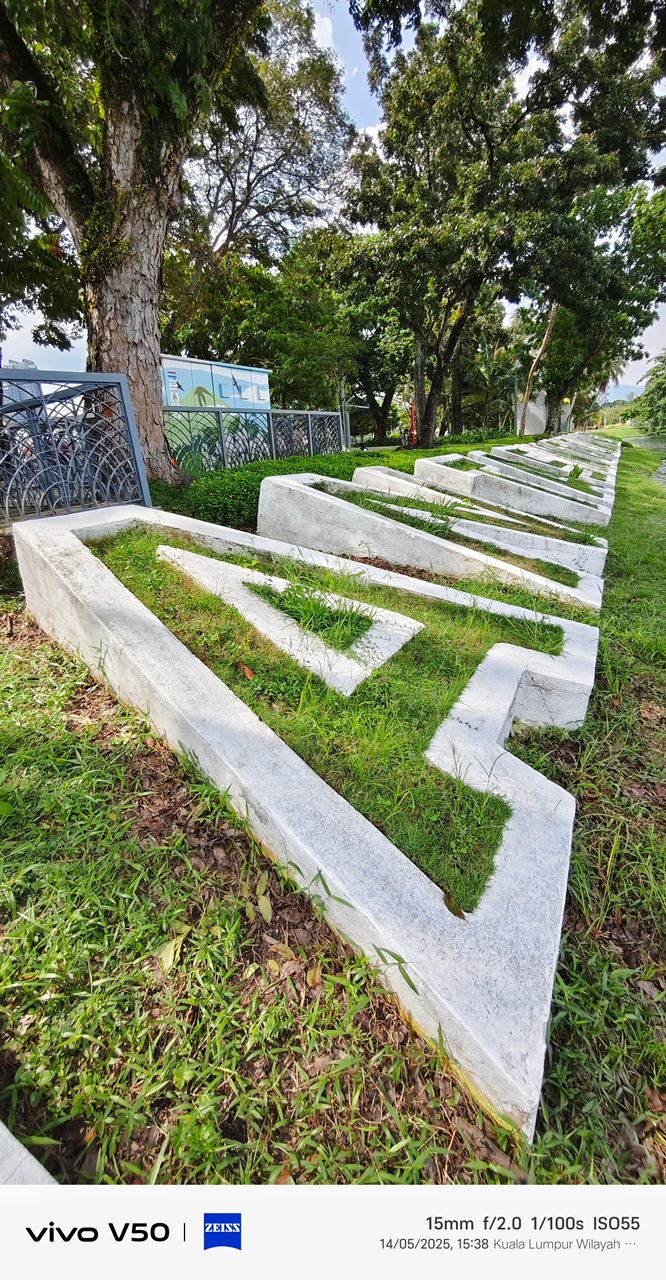
Post-consumer glass is the infrastructure sector's blind spot.
Cities are paying twice: once to landfill glass that traditional recycling streams reject, and again to repaint and resurface infrastructure that keeps failing. GLASTE is built on a different premise: do not recycle what the system cannot absorb. Repurpose it.
Plastic gets the headlines. Glass gets buried.Plastic is recycling's poster child. Glass? The excuse is always the same: no buyers, no value, too heavy, dangerously sharp. So it stays in the ground, landfilled at scale and unable to decompose. GLASTE turns that excuse on its head. The very traits that brand glass as waste, its hardness and sharp, durable edges, are exactly what make it valuable when repurposed for infrastructure. A Malaysian innovation, built for cities everywhere.
Unrecoverable at Scale
Contaminated, mixed-colour glass from households and commercial buildings is rejected by conventional recycling streams. Large volumes globally continue to be landfilled or under-recovered.
Infrastructure That Fails Fast
Thermoplastic road markings and standard pavement surfaces degrade in 1–3 years under tropical heat, heavy traffic, and UV exposure. Councils repaint and resurface repeatedly, burning budget with no lasting fix.
A Hidden Maintenance Burden
Maintenance costs can exceed initial installation costs over time. That is not an infrastructure problem. It is a materials problem, and it is solvable.
Not a product.
A circular infrastructure system.
GLASTE is a material processing and infrastructure deployment platform. We take post-consumer glass at the end of its usable life, grade and crush it into precisely calibrated aggregates, and bind it into high-performance surface systems using polyurethane or epoxy binders.
Source
Post-consumer glass collected from municipal waste streams, commercial buildings, and industrial sites that would otherwise be destined for landfill.
Process
Glass is cleaned, crushed, and graded into precise aggregate sizes. Each grade is formulated for a specific surface application and performance requirement.
Bind
Aggregates are combined with polyurethane or epoxy binders, engineered for UV stability, load-bearing strength, and anti-slip performance.
Deploy
GLASTE systems are installed by trained applicators across walkways, roads, parking decks, sports surfaces, and public plazas, built to reduce repeat repainting and resurfacing.
This is the difference between a sustainability story and a procurement-ready system: GLASTE can be photographed, specified, installed, tested, maintained, and scaled.
Circular infrastructure has to win on performance, not sentiment.
GLASTE is positioned as a practical municipal option: a surface system that gives hard-to-recover glass a second life while addressing durability, safety, and maintenance pressure.
| Criterion | Paint / Coating | Thermoplastic Marking | GLASTE Surface System |
|---|---|---|---|
| Circular material value | Limited use of recovered material | Typically virgin or conventional inputs | Post-consumer glass used as primary surface aggregate |
| Maintenance pressure | Frequent repainting in exposed public settings | Commonly replaced on 1-3 year cycles, depending on site conditions | Designed to reduce repeat resurfacing and repainting cycles |
| Safety performance | Variable under weathering and wear | Dependent on material, installation, and upkeep | Targets >=45 BPN anti-slip performance, designed for ASTM E303 testing |
| Climate relevance | Solves marking, not material recovery | Solves marking, not glass waste diversion | Connects waste diversion, safer public surfaces, and local circular supply chains |
Performance depends on site conditions, specification, installation quality, and maintenance regime. The comparison frames the intended lifecycle advantage and should be paired with project-specific testing.
The award case is not recycling. It is repurposing at municipal scale.
GLASTE links glass waste that cannot decompose with infrastructure cities already need to maintain. That is the shift: from disposal burden to public asset.
Repurpose the overlooked material
Mixed and contaminated glass that is often rejected by conventional recycling becomes a usable civil-material input.
Build visible public value
Instead of disappearing into landfill, the material returns as parking bays, walkways, markings, and public surfaces people use daily.
Reduce repeat maintenance pressure
Durable surface systems help councils move away from short repainting cycles and toward more resilient public works.
Export a Malaysian circular model
The same waste-to-infrastructure pathway can be piloted with GCC cities facing heat, UV, and growing glass waste.
The story is simple enough for the public to understand and rigorous enough for infrastructure buyers to test: glass waste leaves the landfill path and comes back as safer, longer-lived public surface.
Not a pilot. A platform already scaling.
GLASTE has been formally commissioned by multiple municipal councils and government bodies across Peninsular Malaysia. Every completed site is documented with before-and-after evidence, and each one becomes a reference point for the next.
MBSP Seberang Perai: Accessible Parking Bay Resurfacing
Majlis Bandaraya Seberang Perai commissioned GLASTE across 6 accessible parking bay sites, a paid municipal proof-of-concept covering 10 OKU accessible parking bays. Each site was resurfaced with GLASTE material using post-consumer glass as the primary surface aggregate, replacing degraded paint markings that required frequent reapplication.
DBKL: Accessible & Standard Parking Bays
Dewan Bandaraya Kuala Lumpur (City Hall KL) adopted GLASTE for both accessible parking and standard bay resurfacing, diverting approximately 6,665 kg of post-consumer glass. This is our largest single-council volume to date, and a formal engagement with Malaysia's capital city authority confirms GLASTE's suitability for high-visibility, high-traffic urban infrastructure.
MPKJ Kajang: Public Infrastructure Resurfacing
Majlis Perbandaran Kajang deployed GLASTE across 4 public surface sites covering pedestrian infrastructure and community spaces. All sites use post-consumer glass as the primary surface aggregate.
MBIP Johor & MBDK Klang: Drain Cover & Parking
MBIP Johor commissioned GLASTE for a permeable drain cover application, demonstrating the platform's versatility beyond surface coatings and into civil drainage infrastructure. MBDK Klang added accessible parking bay resurfacing, extending GLASTE's footprint across Peninsular Malaysia.
Healthcare, Residential & Beyond
Beyond municipal contracts, GLASTE has been deployed in a private healthcare setting in Kuala Lumpur and at multiple private client residences, demonstrating applicability across both institutional and residential contexts. Demand is now expanding into public spaces, government hospitals, and schools, with active jobs and proposals across these sectors.
One platform.
Multiple infrastructure uses.
Walkways & Pedestrian Paths
Anti-slip surfaces targeting ≥45 BPN for public parks, transit hubs, and commercial precincts.
Road Markings
High-visibility markings using glass aggregate, designed for testing against ASTM E1710 retroreflectivity standards.
Parking Systems
Durable surface coatings for multi-storey car parks and open lots, suitable for chemical exposure and heavy vehicle loads.
Glow & Safety Systems
Photoluminescent glass aggregate systems for emergency wayfinding and low-light pedestrian safety.
Industrial Abrasives
Graded glass abrasive products for surface preparation and blast cleaning, as an alternative to virgin silica sand.
Eco-Sand & Sub-base Fill
Processed glass sand for drainage layers, landscaping sub-base, and road bed applications.
Glass waste should serve people,
not disappear into landfills.
Glaste Care is the dedicated elderly-care infrastructure series within the GLASTE platform: repurposed glass waste engineered into age-sensitive public surfaces for residential care homes, PAVE-type centres, senior living sites, and age-friendly community facilities.
Age-sensitive performance
Move beyond cost-and-aesthetic surface choices toward materials specified around elderly movement patterns, visibility needs, and daily use.
Movement confidence
Support steadier underfoot circulation in places where slower walking pace, balance, hesitation, and assisted mobility are part of everyday design reality.
Spatial orientation
Use surface zones, contrast, and visible pathways to help elderly users read where to walk, pause, turn, and move through a facility with more confidence.
Ongoing care records
Keep inspection, cleaning, and refresh records so operators can maintain elderly-friendly access instead of treating the surface as a one-time installation.
Glaste Care addresses a gap in Malaysian care infrastructure: many facilities meet minimum compliance, but do not actively design the elderly circulation journey. This series treats that journey as a maintained system, not just a finished floor.
Ask About Glaste CareValidated in Malaysia.
Ready for the GCC.
Malaysia has validated the GLASTE model: multiple municipal authorities have commissioned it, and private developers and healthcare operators have adopted it, through word of mouth, visible installations, and demonstrated results.
The GCC presents the same opportunity at a larger scale. Glass waste from hospitality, real estate, and retail is growing across the region, with limited recovery infrastructure. Vision 2030 and UAE Net Zero 2050 mandates are creating real procurement pressure for circular material solutions. GLASTE offers a practical, pilotable answer, already validated in a tropical emerging market, now ready for GCC pilot validation.
- Supports UAE and GCC circular economy and waste-diversion priorities
- Relevant to green building and circular material strategies in the region
- Suitable for GCC pilot validation under local heat and UV conditions
- Scalable licensing model for GCC regional deployment
- Supports localization of waste-to-infrastructure supply chains
GCC Glass Waste Challenge
Growing
Glass waste from hospitality, retail, and real estate sectors with limited recovery infrastructure
UAE Net Zero Mandate
2050
National target driving demand for circular material solutions in public infrastructure
Municipal Maintenance Reality
Repeated
Surface paint and markings require frequent reapplication, a recurring cost GLASTE is designed to reduce
Demonstrated in Malaysia.
Designed to scale globally.
The scale story is intentionally grounded: every number points back to adoption, surface performance, or diversion from landfill, the evidence investors and public-sector buyers need before a pilot expands.
Circular Material Input
Post-consumer glass is the primary surface aggregate across all GLASTE product lines, diverting hard-to-recover glass from landfill and replacing virgin aggregates, reducing demand for new raw material extraction.
Lifecycle Maintenance Advantage
Potential lifecycle savings from fewer reapplication cycles compared with conventional paint and thermoplastic markings, subject to site conditions and usage intensity.
Market-Led Scalability
Spanning the public sector, private developers, and commercial operators, growth driven by visible installations and demonstrated results, not sales push.
From waste stream
to public surface. Drag to compare.
Ready to pilot GLASTE
in your project?
We work with municipal councils, property developers, and infrastructure owners. Whether you want a site assessment, a Glaste Care plan, a cost comparison, or a pilot proposal, get in touch and we will respond within 48 hours.